
Our Foundation's Inspiring Journey
Our journey continues from where Dag left off in a way. We use his legancy towards our work.


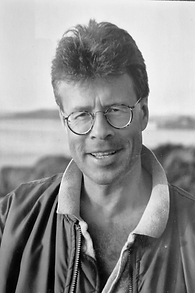
Dag Strand Nielsen was born on June 1, 1950, in Eidsvoll, as the eldest of three siblings.
Dag was distinctly musical and took piano lessons from Eva Sandvik Stugu for many years after the family moved to Bekkestua in Bærum in 1961. He had a close relationship with Mrs. Stugu, and it was in the environment around her piano teaching that he felt most at home and found good friends. He was probably seen as a bit unusual because he preferred classical music over, for example, the Beatles craze that was raging while he attended Nadderud High School. He played the piano with such intense passion that he once broke a key on the family’s piano while practicing Kjempeviseslåtten by Sæverud!
He came out early and proudly as gay and had a clear understanding of his orientation from a young age. Over time, he became a prominent voice for gay rights and was an important figure in the LGBTQ+ movement, which eventually led to the decriminalization of homosexuality in 1972.
He studied at the University of Oslo (Blindern), but chose to drop out after becoming involved in the Marxist-Leninist (ML) movement and Marxist ideology. This ideology resonated with Dag’s commitment to justice, solidarity, and equal rights for all.
The ML movement expected its members to work alongside the working class – “on the floor.” Dag therefore started working as a waiter at the Theatercaféen and later as a bartender at the Summit Bar on top of the SAS Hotel. There, he became a union representative and organized several strikes, including one to improve working conditions for housekeeping staff at the SAS Hotel. He also served as the leader of the Oslo Hotel and Restaurant Workers’ Union for a period.
Dag was genuinely concerned about other people. He saw the most vulnerable in society and courageously chose to stand up for them. When he was diagnosed as HIV-positive in the mid-1980s, this strong social commitment naturally led him to work on AIDS-related issues, where he did not hesitate to contribute directly and compassionately. He organized and led the Henki Campaign, which ultimately succeeded in the Supreme Court, allowing Henki Hauge Karlsen, who was HIV-positive, to regain his job as a bartender in Fredrikstad.
He also visited South Africa several times, where he worked hands-on with HIV-positive mothers and children.
Dag lived with HIV for over 10 years, but eventually developed AIDS and passed away on January 26, 1995.
He is remembered as a selfless, generous, kind, courageous, and warm person – a passionate idealist. He cared about the people around him, regardless of who they were – if someone needed help, he was there. He leaves behind a legacy of values marked by solidarity, courage, and genuine human compassion. His brother Frode’s establishment of a foundation in Dag’s name is an important contribution to carrying these values forward, and a way to ensure that his life and commitment continue to have meaning for others.
The foundation
In late 2022, Frode Strand-Nielsen established the privat non-profit Dag Strand Nielsen and Family Foundation. The foundation is named after, and established in honor of, Frode's late older brother, Dag (1950-1995). This is a continuation of the Dag Strand Nielsen Foundation, which was established in 2009.
As motivation for the foundation, Frode has drawn inspiration from, among others, Andrew Carnegie. This legendary Scottish-American businessman became the world's second richest man, and then gave it all away.
Another philosopher that has inspired the board of the foundation is John Rawls, and in particular his famous Veil of Ignorance thought experiment. To design a just society, Rawls believed we must put on a veil of ignorance - stripped of knowledge about our own social status, talents, or personal circumstances. From this impartial standpoint, he concluded that everyone has a right to “equal basic liberties” and that inequalities are to be arranged so that they are “to the greatest benefit of the least advantaged”.
This spirit of justice — across both geography and generations — lies at the core of the foundation’s purpose.
For the foundation's board members, it is desirable that our work contributes as much as possible to making a positive difference in the world, within the two purposes the foundation has set.